Imagine standing in a supermarket aisle, picking up a bag of coffee beans or nuts. That thin, crinkly stand-up pouch might seem like just another ordinary container. But to materials scientists and sustainability advocates, this unassuming film represents a molecular-scale revolution poised to transform global industrial practices.
Chapter 1: Packaging's Gordian Knot and Its Solution
For decades, food packaging relied on multilayer composites—sandwiches of plastic, aluminum foil, paper, and metal coatings—to balance durability with preservation. While effective, this approach created a recycling nightmare. The inseparable material combinations meant most composite packaging ended up in landfills or incinerators.
Enter mono-material polypropylene (Mono-PP), promising equivalent performance using just one recyclable material. But could a single polymer truly replace complex laminates?
Chapter 2: MDO Technology – Aligning Molecules Like Soldiers
Polypropylene (PP) boasts chemical stability, heat resistance, and abundance, but suffers from inherent pliability. In its natural state, PP films lack the rigidity needed for high-speed packaging lines.
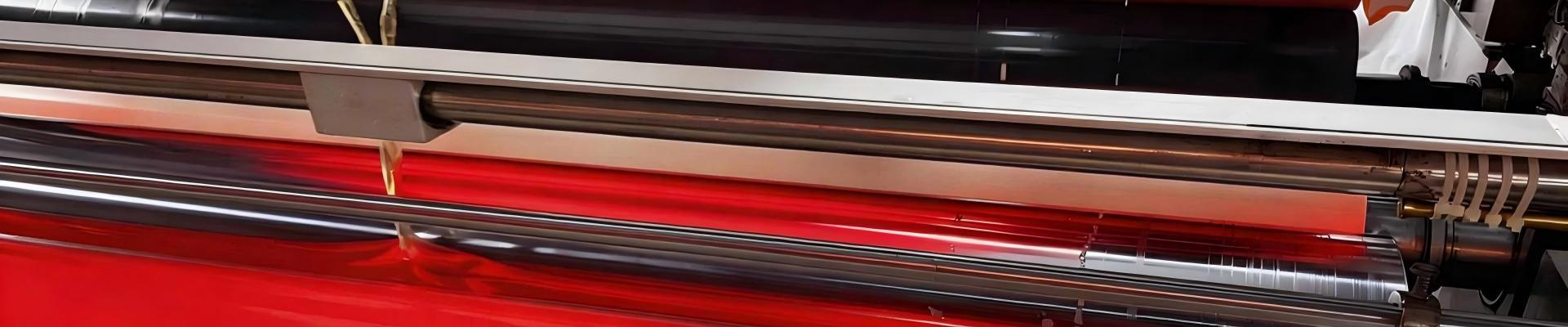
Machine Direction Orientation (MDO) technology solves this through molecular engineering. By heating and mechanically stretching PP films longitudinally, the once-tangled polymer chains align like straightened steel cables. This molecular rearrangement dramatically increases tensile strength while reducing thickness—transforming flimsy plastic into paper-like rigidity without compromising flexibility.
Chapter 3: The Data-Driven Advantages
Industry adoption of MDO-PP stems from measurable benefits:
-
Production efficiency:
MDO-PP's enhanced tensile strength reduces film breakage on high-speed packaging lines, minimizing downtime.
-
Recycling purity:
As pure PP, these packages integrate seamlessly into existing recycling streams without separation processes, enabling true circularity.
-
Printing performance:
Special surface treatments allow vibrant, high-resolution graphics rivaling traditional laminates—critical for brand aesthetics.
Chapter 4: Versatility Across Applications
MDO-PP's adaptability spans multiple sectors:
Barrier packaging:
Through multilayer co-extrusion with EVOH (ethylene vinyl alcohol), MDO-PP achieves oxygen and moisture protection comparable to aluminum composites while maintaining mono-material recyclability.
Lightweighting:
Foamed MDO-PP variants reduce material use by up to 30% while maintaining strength, significantly lowering carbon footprints during transportation.
Chapter 5: The Circular Economy Imperative
As global plastic regulations tighten, MDO-PP represents more than technical innovation—it's strategic risk mitigation. By transitioning from linear (make-use-dispose) to circular (make-use-recycle-remake) models, manufacturers future-proof their operations against escalating sustainability mandates.
Next time you encounter a PP-labeled package, recognize it as more than mere wrapping—it's a testament to materials science enabling both commercial viability and environmental responsibility. The evolution of packaging continues, with MDO-PP writing one of its most transformative chapters.


 আপনার বার্তাটি 20-3,000 টির মধ্যে হতে হবে!